
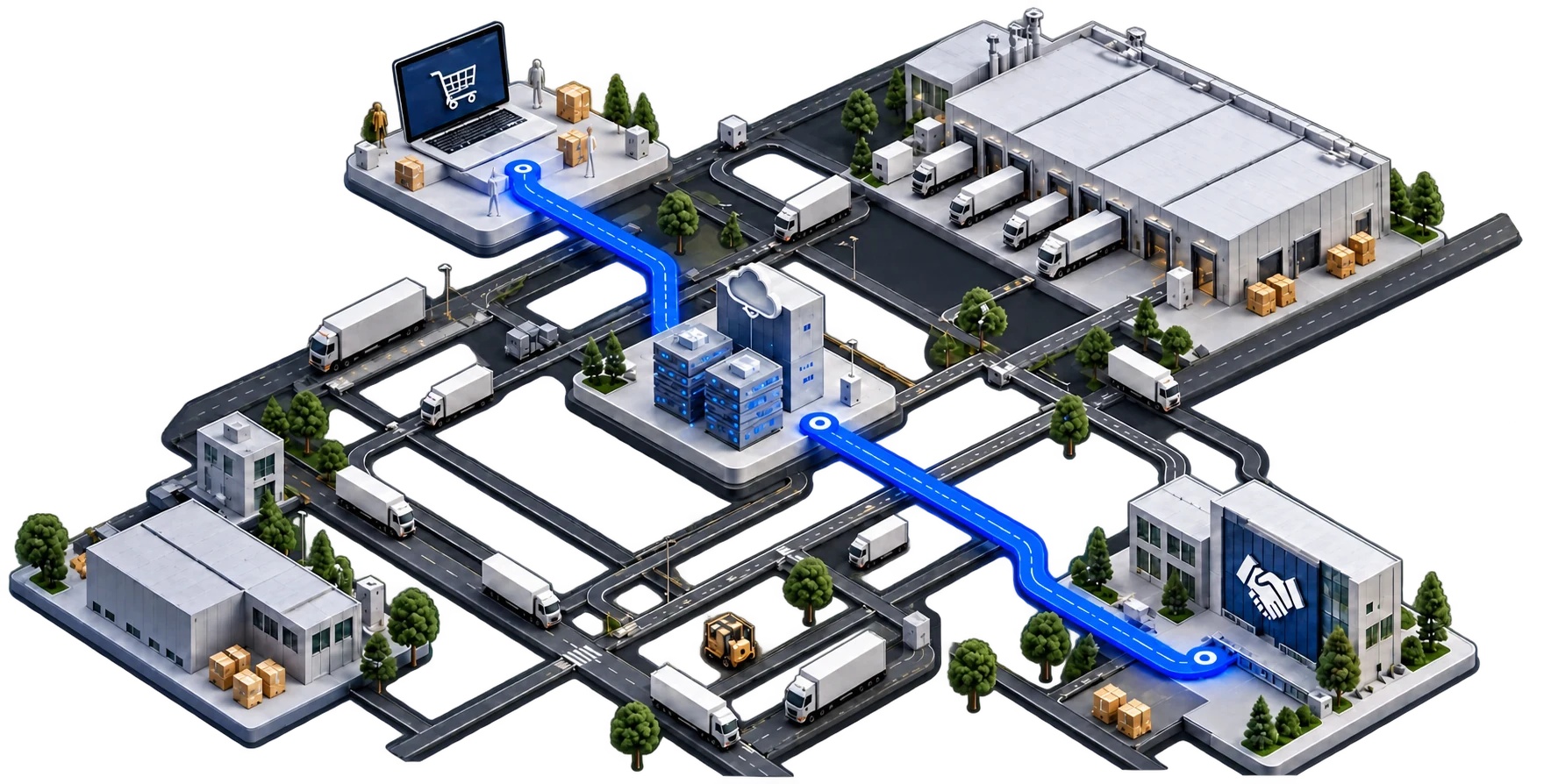
A busy pipeline can hide a targeting problem. More demos and proposals won't help much if the team is pursuing customers the business struggles to serve.
I'd check the ideal customer profile, or ICP: a description of the customers you can serve well and profitably. Does it help the team qualify a deal before committing time to it?
A stalled deal may have another cause: a changed budget, a missing integration, or a buyer who prefers the incumbent. Check those before blaming the customer profile.
Look for a pattern across deals. If every prospect needs a new demo and implementation plan, with little you can reuse, the profile may be too broad.
Why the customer profile stays broad
A platform may support 3PLs, brands, retailers, and distributors. A logistics provider may have capacity for several industries. Each additional segment looks like a way to use what you've already built.
Sales has a revenue target, and leadership wants room to grow. It's understandable to keep the door open to a promising account.
But the team has limited time. Which buyers have a problem you solve well? Can you reach them? Can you deliver at a sensible margin? Those answers should determine where you focus.
You can pursue accounts outside the priority segment. Give each exception a reason and account for the extra work it needs.
Where a broad ICP can cost you
Check your own data for these problems; a broad profile won't cause all of them in every business.
-
Evaluation takes more work
Working out the use case from scratch can mean extra integration checks and scoping meetings. A clearer profile helps the team prepare for recurring requirements and spot a poor fit earlier.
-
The buyer can't see the fit
An apparel brand managing returns and seasonal peaks needs different proof from an industrial distributor. Show relevant workflows and customer references so the buyer can assess the fit.
-
Selling effort is hard to reuse
Include discovery, solution design, pricing exceptions, and implementation planning when assessing an account. A large contract may still be unattractive if it requires extensive custom work.
-
Delivery exposes the mismatch
An unexpected workaround or integration project can slow onboarding and add support costs. That changes the account's economics and may put renewal at risk.
Review wins and losses alongside onboarding and renewal records. That helps distinguish poor targeting from a product gap or a delivery problem.
Start with the buyer's operating requirements
Customers in the same industry can need different things. For example:
-
Example: A multi-client 3PL
A multi-client 3PL manages different shipping rules and return policies for each brand. Show how it can keep client inventory separate, route exceptions, and apply those controls across locations.
-
Example: A growing DTC brand
A direct-to-consumer brand selling through Shopify and Amazon may need accurate inventory across channels and order visibility for customer service. Show which systems share data, how quickly they update, and who handles exceptions.
-
Example: A regional 3PL pursuing CPG
A regional 3PL pursuing consumer packaged goods accounts may need lot traceability, expiration-date controls, and retail compliance. Clarify which requirements are standard and which need additional work before signing.
Use the same customer requirements in the website copy, demo, proposal, and onboarding plan. Have operations check the promises before sales makes them.
This is part of my GTM and commercial positioning work: choosing customers and checking the delivery commitments behind the sale.
Build an ICP the team can use
Start with existing accounts. Your largest customer may not be your best model for growth.
-
Study the accounts that work well. Compare retention, expansion, margin, onboarding effort, and support needs. Add customer feedback. Look for common order profiles, integrations, and reasons for buying, then check those patterns against churned accounts and lost deals.
-
Use it in qualification. Write down the requirements you meet well, buying conditions that matter, and reasons to decline or escalate a deal. Have product and operations review it. Use it in discovery, demos, pricing, and implementation scoping.
-
Check adjacent segments. Work out how much of the product, delivery approach, and sales process you can reuse. A second DTC category may have different compliance or fulfillment needs. Check the workflows, economics, and buying process before committing.
Track qualified pipeline by segment, win and loss reasons, sales-cycle length, onboarding effort, retention, and margin. Compare the priority segment with the exceptions. Adjust the profile if the results don't support it.
A practical sequence for expansion
-
Step 1
Choose a priority segment
Agree on requirements you serve well. Check that sales and operations would qualify the same prospect.
-
Step 2
Document what works
Record what was sold, delivered, and achieved. Get permission to use relevant customer references.
-
Step 3
Test an adjacent segment
Run a limited test. Check what needs to change before committing more sales or delivery capacity.
The operating model matters. See the logistics and commerce teams I work with.
Use the profile to make a decision
At the next pipeline review, ask why an opportunity fits the profile and what delivery risks need checking. If the answer is mostly company size and contract value, add more detail to the profile.
An existing customer commitment or market test may justify an exception. Assign someone to approve it and track the extra effort so the team can review the decision later.
Try qualifying a few recent opportunities with the new profile. Where would it have changed the team's decision?
Use those cases to find unclear criteria before rolling it out.
If your team needs help making these choices, discuss your ICP challenge with me.