Moving upmarket in logistics and commerce technology.
I help logistics and commerce-tech companies decide which larger customers they can serve well, then adapt the sales approach and delivery plan. We look at the operating requirements, cost to serve, and people needed to support those accounts before committing more resources.

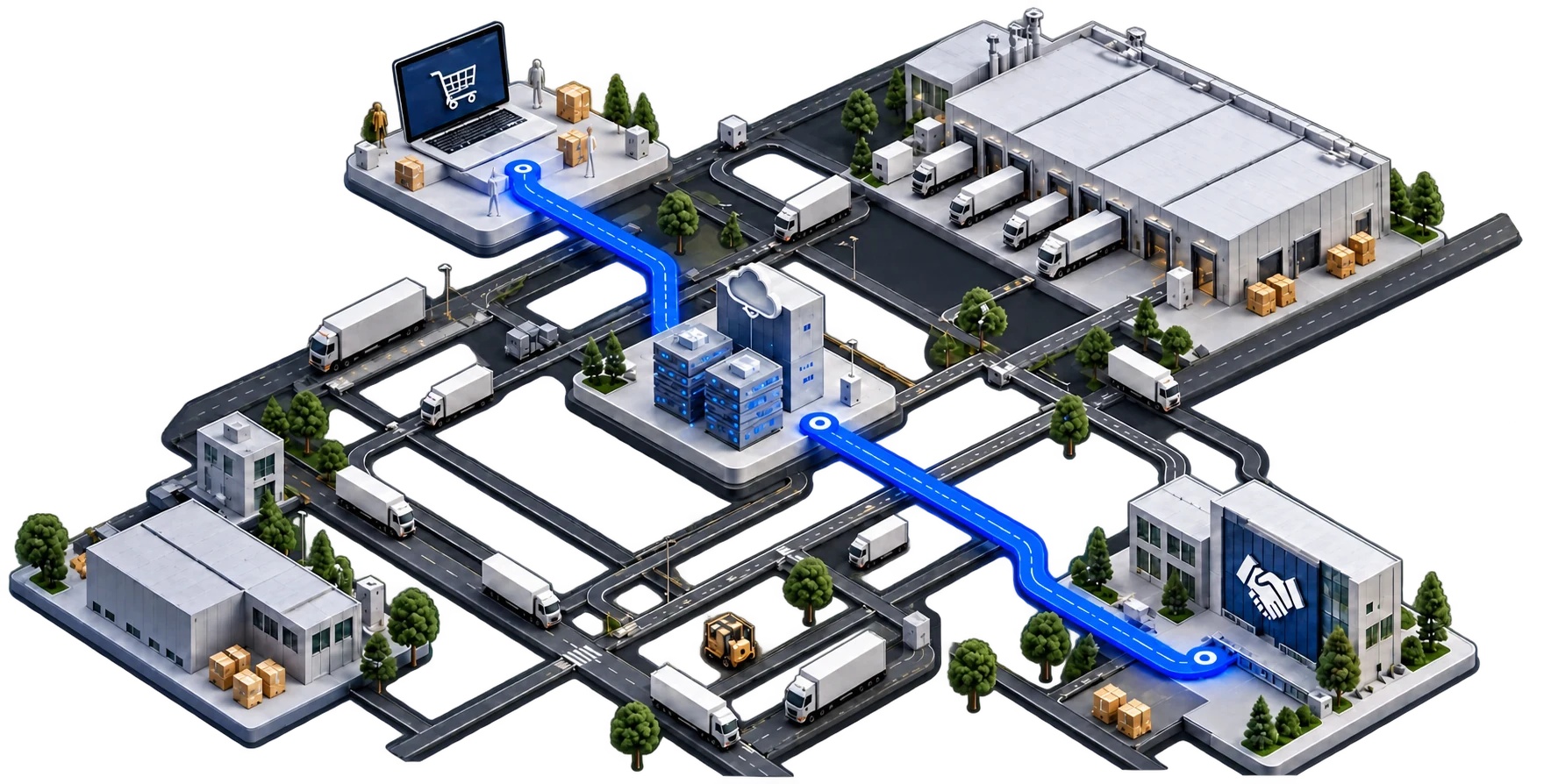
When larger deals start exposing gaps
You may already have a few larger customers, but the team still treats each deal as a special project. Common signs include:
- Enterprise prospects like the product, then stall during integration, security, or procurement review.
- Sales qualifies accounts by revenue or order volume, with little agreement on the workflows you can support.
- Proposals depend on custom work that product or operations has not assessed.
- Larger contracts bring more revenue, but onboarding and support absorb the margin.
- Marketing attracts one type of buyer while sales is trying to close another.
I start by checking what recent opportunities and existing accounts reveal. That helps us decide whether to change targeting, improve the offer, or address delivery gaps first.
How I assess and plan the move
- Compare the accounts you have. Review wins, losses, contract value, sales effort, onboarding, support, retention, and margin. Speak with the people selling and delivering the work.
- Choose a specific customer profile. Define the operating problem, systems involved, buying trigger, decision makers, and requirements you meet well. Record reasons to decline or escalate an opportunity.
- Check the promises behind the sale. Have product, operations, and customer success assess the proposed use case. Identify dependencies, capacity limits, and changes needed before launch.
- Prepare the commercial approach. Update discovery, demonstrations, customer proof, proposals, and handoffs. Give sales a way to involve technical and delivery teams early.
- Test and review. Pursue a limited set of suitable accounts, then compare sales effort and delivery results with the assumptions in the plan.
This combines customer targeting and commercial positioning with go-to-market strategy. The scope depends on the gaps we find.
What needs to be true before expanding
I use questions like these to assess readiness. There is no universal contract size or company stage that makes the answer yes.
| Area | Evidence to check |
|---|---|
| Product and delivery | Can you support the buyer's integrations, volumes, controls, reporting, and service expectations? Which requirements need additional work? |
| Economics | Does the account make sense after solution design, implementation, support, and any customer-specific work? Can you fund a longer sales cycle? |
| Sales support | Who handles technical evaluation, procurement, security questions, and commercial review? Do they have time and usable materials? |
| Onboarding and ownership | Who owns the implementation plan, customer handoff, and ongoing service? Is capacity available alongside current commitments? |
If a requirement is essential and delivery is uncertain, address it before broadening the sales push. If the fit is plausible but unproven, a tightly scoped test may be the useful next step.
An example of a useful decision
Consider a commerce software company pursuing a retailer with stores, marketplaces, and direct-to-consumer orders. This is an illustrative scenario. The buyer wants order routing, inventory visibility, and a clear process for exceptions across those channels.
Before pursuing similar retailers, I would check which workflows the platform supports, how the systems exchange data, and who would own implementation. We would compare the expected contract value with integration and support effort, then define what the first account needs to demonstrate. That gives the team a basis for expanding, narrowing the target, or fixing a specific gap.
The experience behind this work

As CRO at Pipe17, I repositioned the company from commerce iPaaS toward order orchestration and order management. We shifted the target customer from SMB and mid-market to enterprise accounts with complex order operations, rebuilt the sales approach, and aligned sales, marketing, and partnerships around that focus.
Average yearly contract value grew by more than 600% as the company moved into enterprise accounts. Read the Pipe17 example for the work and context. It informs how I approach these decisions with clients.
What the work can produce
Depending on the agreed scope, the work can include a target customer profile, qualification criteria, a readiness assessment, positioning and sales materials, and a plan for testing the new segment. We define owners and review the assumptions as evidence comes in.
Where responsibilities between teams are unclear, revenue function alignment can be part of the work. For more on choosing customers, read how to put an ideal customer profile to work.
Discuss the accounts you want to pursue
Bring a recent larger deal, one that stalled, and the delivery questions your team is still debating. Book a 30-minute conversation or send me the situation. We can discuss where the uncertainty sits and whether I can help.
Related growth decisions.
See how I approach the work, what to consider, and examples from my operating roles.
-
3PL Growth Strategy
Choose the customers, capabilities, and sales approach that fit your 3PL’s next stage.
Explore 3PL growth strategy -
Partnerships That Produce Revenue
Choose useful partners, prepare teams to sell together, and evaluate the commercial results.
Explore partnerships that produce revenue